About
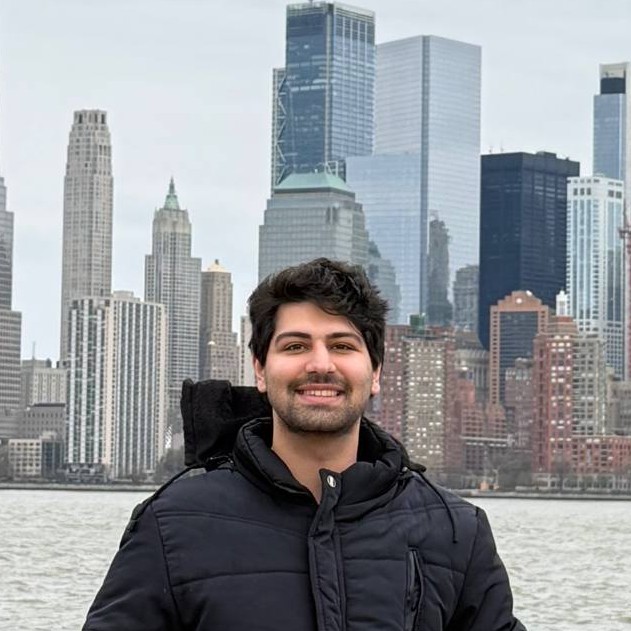
🧑🏻💻 I am a Ph.D. candidate in Computer Sciences at University of Massachusetts Amherst, working with Prof. Amir Houmansadr in the Secure, Private Internet (SPIN) Research Group.
🔬 My research focuses on the security and safety of AI systems that reason, interact, and act in the world. I study vulnerabilities in autonomous and embodied systems, including AI agents, vision-language models (VLMs), vision-language-action (VLA) models, and multi-agent systems. I also work on privacy and provenance in generative AI.
My work has been published at USENIX Security and includes collaborations with researchers at Qualcomm and Cisco.
💼 I am looking for research and ML internships for Summer 2027, in AI security, safety, and robustness for embodied and agentic AI. Feel free to reach out by email.
Selected Publications
View All →Visual Grounding and Deliberation Help Multi-Robot Teams Make High-Stakes Decisions
Mohammadreza Teymoorianfard, Saaduddin Mahmud, Jean-Philippe Monteuuis, Jonathan Petit, Shlomo Zilberstein, Amir Houmansadr, Eugene Bagdasarian
Under review
A benchmark for multi-robot safety decisions under distributed information, and HUDDLE, a structured deliberation protocol that raises team accuracy to up to 96%.
ReasonBreak: Probing Vulnerabilities in Reasoning-Enabled Vision-Language-Action Models for Autonomous Driving
Mohammadreza Teymoorianfard, Jean-Philippe Monteuuis, Jonathan Petit, Amir Houmansadr
arXiv preprint arXiv:2605.29114
The first systematic black-box study of reasoning-enabled VLA models for autonomous driving under realistic textual input corruptions, with a reasoning-aware evaluation framework and benchmark.
Network-Level Prompt and Trait Leakage in Local Research Agents
Hyejun Jeong, Mohammadreza Teymoorianfard, Abhinav Kumar, Amir Houmansadr, Eugene Bagdasarian
USENIX Security Symposium
A prompt and user-trait leakage attack against locally deployed web research agents that uses only network-level metadata such as visited IP addresses and their timings.
News
Attended USENIX Security 2026 in Baltimore, where our work on privacy leakage in local research agents appeared.
TRACE, our monitoring framework for detecting sabotage in long-horizon LLM agent trajectories, was released on arXiv.
Advanced to Ph.D. candidacy at UMass Amherst.
ReasonBreak, our study of vulnerabilities in reasoning-enabled vision-language-action models for autonomous driving, was released on arXiv.
Our work on network-level prompt and trait leakage in local research agents was accepted to USENIX Security 2026.